
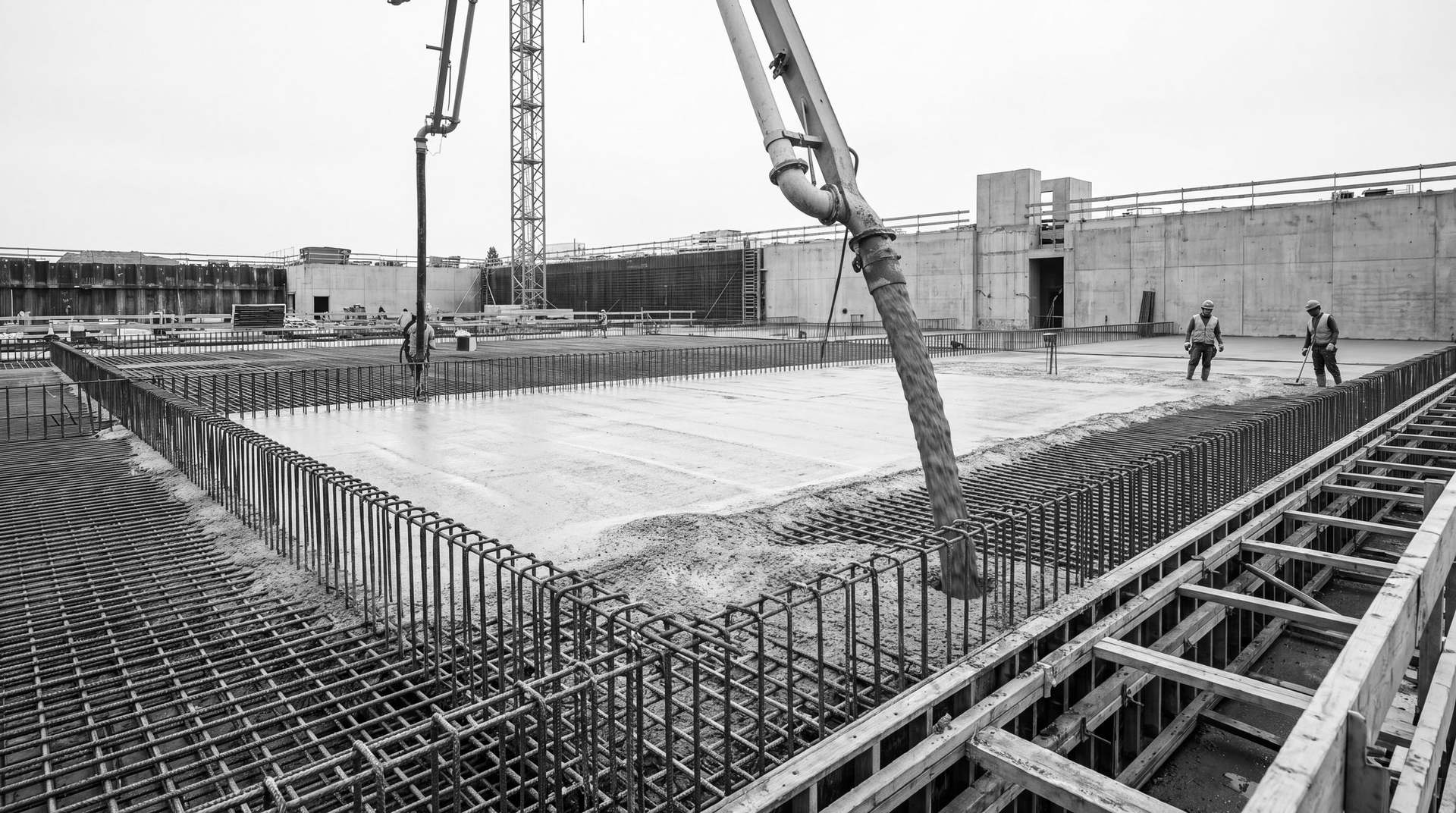
Build smarter, faster, cleaner.
Build with NuGreen.
NuGreen cement replaces Portland clinker entirely — no clinker, no calcination CO₂ — turning industrial mineral byproducts into premium, ultra-low-carbon materials for tomorrow's infrastructure.
About one-fifth the embodied carbon of conventional 6,000 psi concrete* — 82.6 kg CO₂e/m³ cradle-to-gate
Benchmark comparison
Structural-level compressive strength in approximately 90 minutes
Technical performance
Less production water vs conventional concrete*
Benchmark comparison
Lower primary energy vs published industry reference*
Benchmark comparison
Why NuGreen
Change the binder.
Not the concrete industry.
NuGreen combines industrial mineral resources with proprietary liquid activation chemistry to create an advanced cementitious binder — while preserving familiar ready-mix production, transportation and placement workflows.

Early strength
~5,000 PSI in ~90 minutes
Structural-level compressive strength in about 90 minutes — potentially faster return to service.
Embodied carbon
~81% less embodied carbon*
About one-fifth the embodied carbon of conventional 6,000 psi concrete* — 82.6 kg CO₂e/m³ cradle-to-gate.
Supply chain
Same silos. Same batching. Same trucks.
A drop-in binder at the plant — no changes to batch plants or equipment. Admixture and pumping performance are qualified per project.
Process energy
No ~1,450 °C clinker kiln
Portland’s clinker calcination stage is eliminated — ~57% lower primary energy*.
Water
~52% less production water*
Lower batch and process water than conventional concrete production.
Carbon value
Structured for carbon crediting
Every avoided tonne is quantified against an OPC baseline under the Verra VCS framework — using the methodology written for geopolymer cement. Explore the carbon program
* Benchmark comparison — NuGreen calculation vs published industry reference data — methodology.
Rapid early strength
Strength at the speed
of infrastructure
NuGreen develops structural-level compressive strength in approximately 90 minutes, potentially compressing the time between placement and return to service. Performance continues to build through 24 hours and 28 days.
- ~5,000 PSI
- In approximately 90 minutes
- Technical performance
- 13,000+ PSI
- 28-day reported high-performance result
- Technical performance
- Pour 0 min
- ~90min ~5,000 PSI Structural-level compressive strength
- 24 hours ~9,000 PSI
- 28 days 13,000+ PSI Reported high-performance result
Time becomes a performance metric.
Less downtime
Potentially shorten the interval between placement and return to service.
Faster turnover
Potentially compress construction and production cycles.
Shorter critical path
Rapid early strength can change project sequencing.
Strength figures are reported results; primary laboratory reports are being consolidated into the substantiation file. Hot-weather performance is under validation with a UAE ready-mix partner; no temperature limits are stated until that programme reports.
The technology
Geopolymer chemistry.
Ambient temperatures.
Zero clinker.
Our proprietary activation chemistry — incorporating a biomass-based component — creates strong aluminum-silicate bonds at ambient temperature: no 1,450 °C kilns, no limestone calcination, no compromise on performance.
- Ambient-temperature processing eliminates the ~1,450 °C Portland clinker kiln
- Utilizes fly ash and ground blast-furnace slag as core ingredients
- Stronger bonds with superior resistance to chemical attack
- Drop-in at the plant — no changes to batch plants or equipment; admixtures qualified per project
Applications
Built for the projects
that can't afford to wait.
From fast-track transportation and marine exposure to lower-carbon urban construction, NuGreen brings rapid strength, durability and lower embodied carbon into familiar concrete workflows.
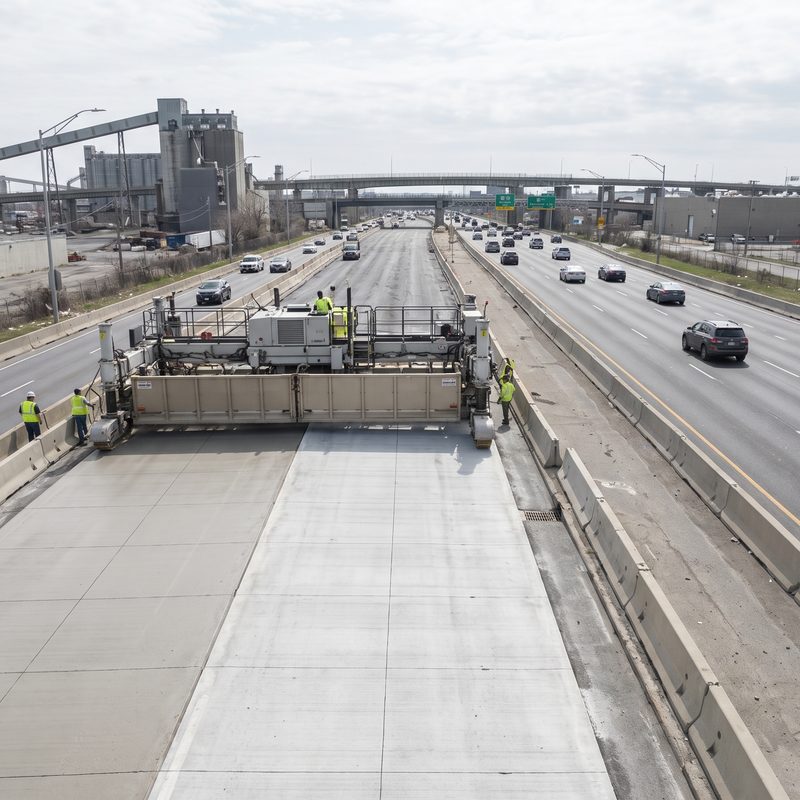
Roads & highways
Fast-track paving, rehabilitation and repair where return-to-service time drives the schedule.
- Rapid early strength
- ~5,000 PSI in ~90 minutes Technical performance
- Lower carbon
- ~81% less carbon* Benchmark comparison
- Workflow
- Familiar ready-mix production and placement
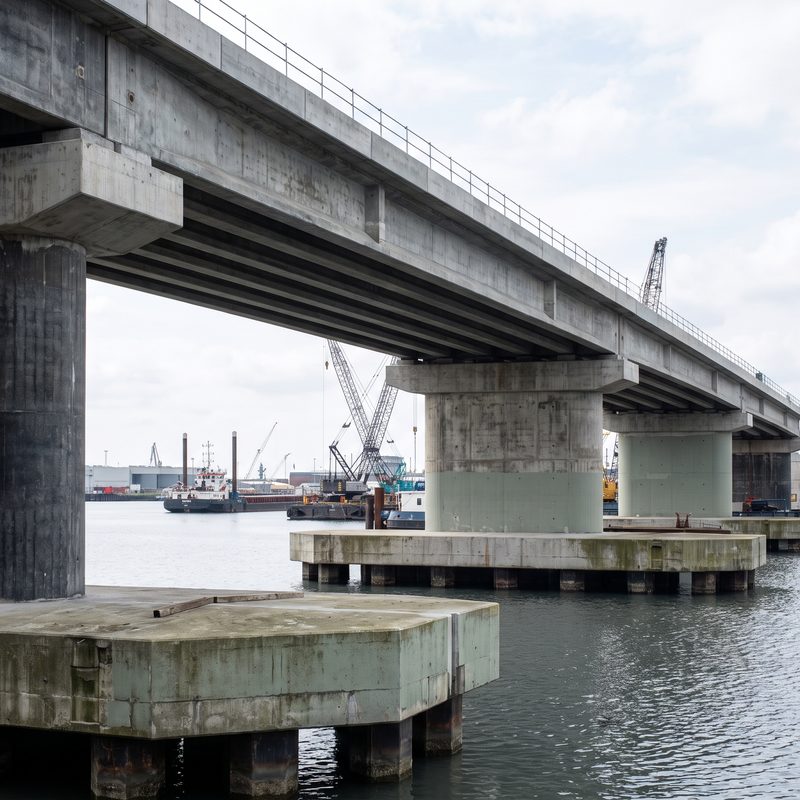
Bridges & ports
Marine and structural rehabilitation in chloride- and sulfate-exposed environments.
- Chloride penetration
- Reported: <1,000 coulombs, ASTM C1202 Technical performance
- Sulfate resistance
- Reported: excellent, ASTM C1012 Technical performance
- Freeze-thaw
- Reported: 300+ cycles, ASTM C666
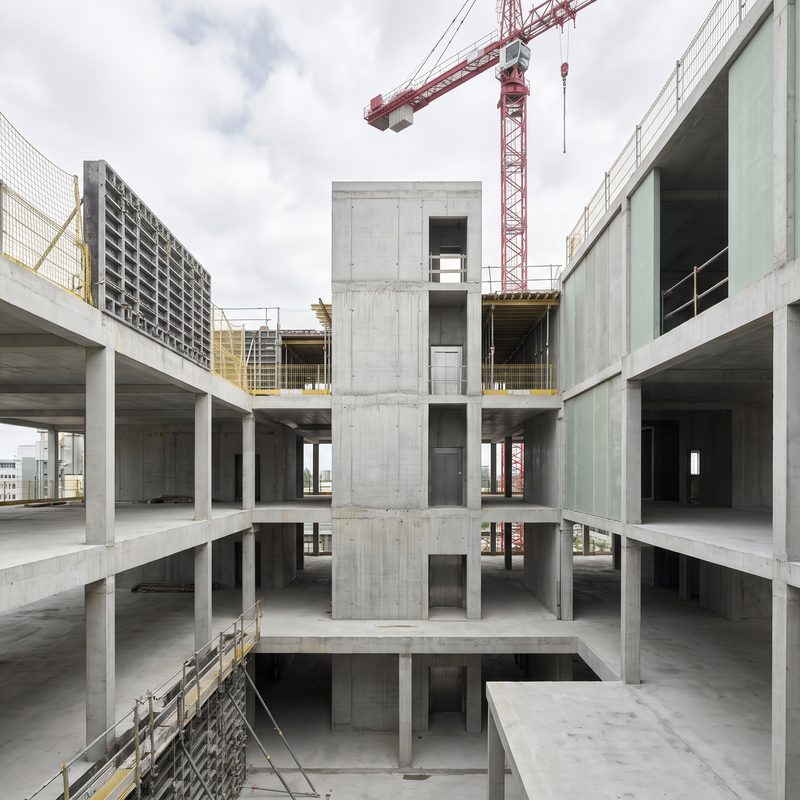
Urban & institutional
Commercial and institutional structures working to embodied-carbon targets on conventional schedules.
- Embodied carbon
- 82.6 kg CO₂e/m³ cradle-to-gate Independent LCA data
- Benchmark
- ~81% less carbon* Benchmark comparison
- Rating support
- Supports LEED objectives
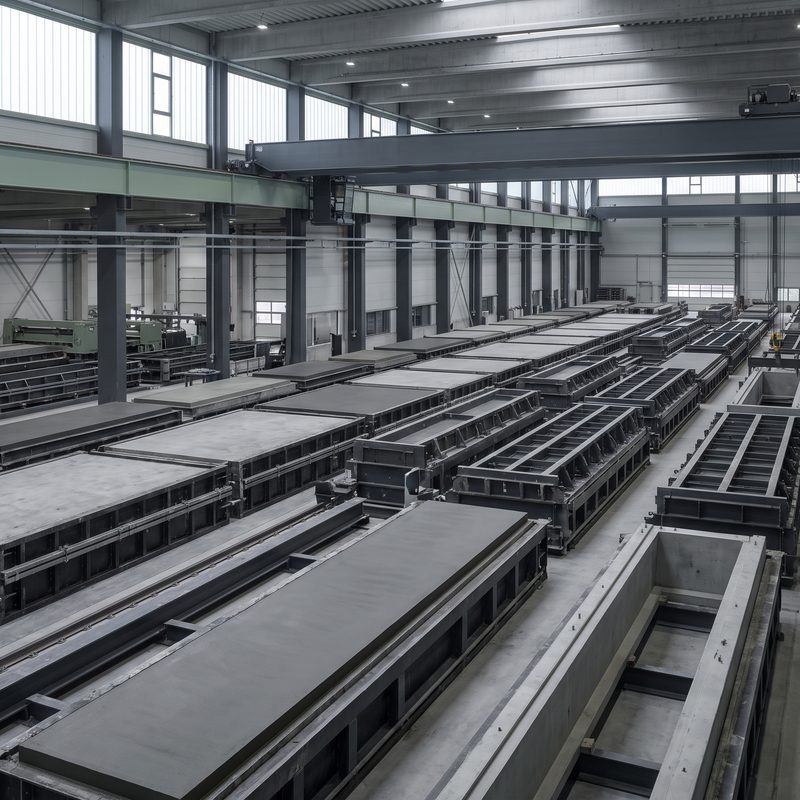
Precast & industrial
Plant production and industrial slabs where mould turnover and return to service set the output ceiling.
- Early strength
- ~5,000 PSI in ~90 minutes Technical performance
- 24 hours
- ~9,000 PSI Technical performance
- Workflow
- Existing plant batching and equipment
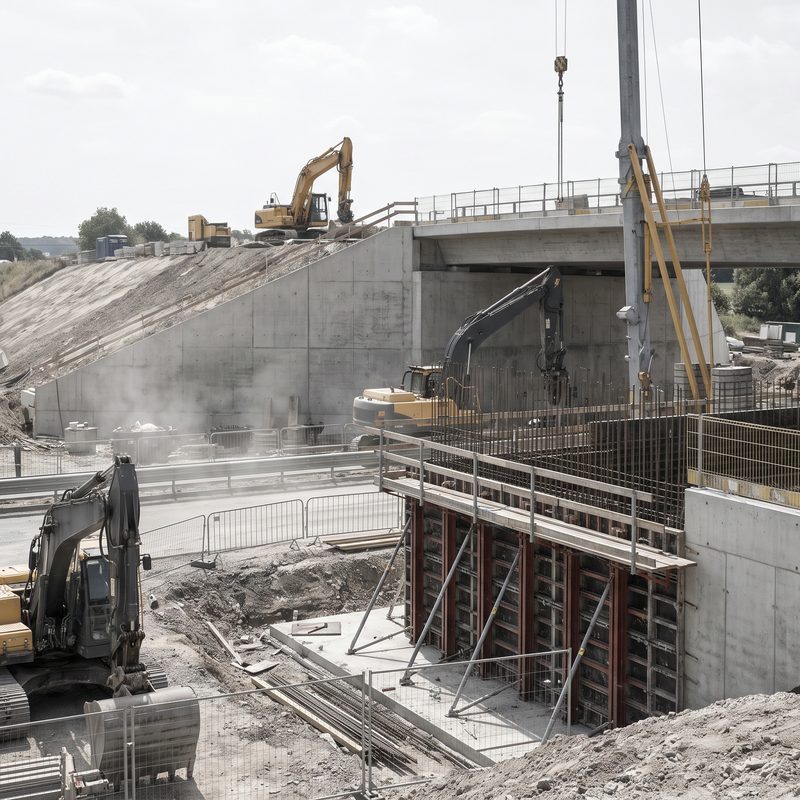
Rapid reconstruction
Resilient civil rebuilding where logistics and return-to-service govern the programme.
- Early strength
- ~5,000 PSI in ~90 minutes Technical performance
- 24 hours
- ~9,000 PSI Technical performance
- Feedstock
- Industrial mineral resources
Explore all applications * Benchmark comparison — NuGreen calculation vs published industry reference data. Strength and durability figures are reported results; primary reports are being consolidated.
Measured impact
Impact you can verify,
not just claim
Figures labelled independent LCA data are supported by independently verified environmental documentation; benchmark comparisons are NuGreen calculations against published industry data.
- 82.6 kg CO₂e/m³
- Cradle-to-gate GWP, reference concrete
- 13,000+ PSI at 28 days
- Reported high-performance result
- 70% lower transport emissions
- With localized production
- 150 years service life
- Up to 50% longer than Portland concrete
Get started
Ready to build a greener future?
Join the growing network of construction companies, developers, and governments using NuGreen cement for sustainable infrastructure.