Applications

Where performance meets
deployment reality.

NuGreen combines lower embodied-carbon reference performance, rapid strength development and familiar concrete workflows for infrastructure environments where schedule, durability and sustainability all matter.

Project fit

Which attributes matter
most in your sector

NuGreen's relevance changes with the problem being solved. This maps the attributes that usually govern each environment — jump to any sector for the detail.

Attributes describe which documented NuGreen characteristics typically govern each environment. They are not performance ratings. Suitability for any specific project is confirmed against that project's mix design, exposure class and acceptance criteria.

Sector 01

Roads & highways

Lane closures, repair windows and paving schedules are governed by how quickly a surface can carry load again. Return-to-service time, not 28-day strength, usually sets the programme.

Why NuGreen may matter

  • ~5,000 PSI in approximately 90 minutes, with strength continuing to build to ~9,000 PSI at 24 hours Technical performance
  • ~81% lower embodied carbon than published industry reference concrete* Benchmark comparison
  • Batched, transported and placed through conventional ready-mix workflows

Typical project types

Full-depth repair · rehabilitation · fast-track paving · runway and taxiway work · shoulder and ramp reconstruction
Evaluate a road project

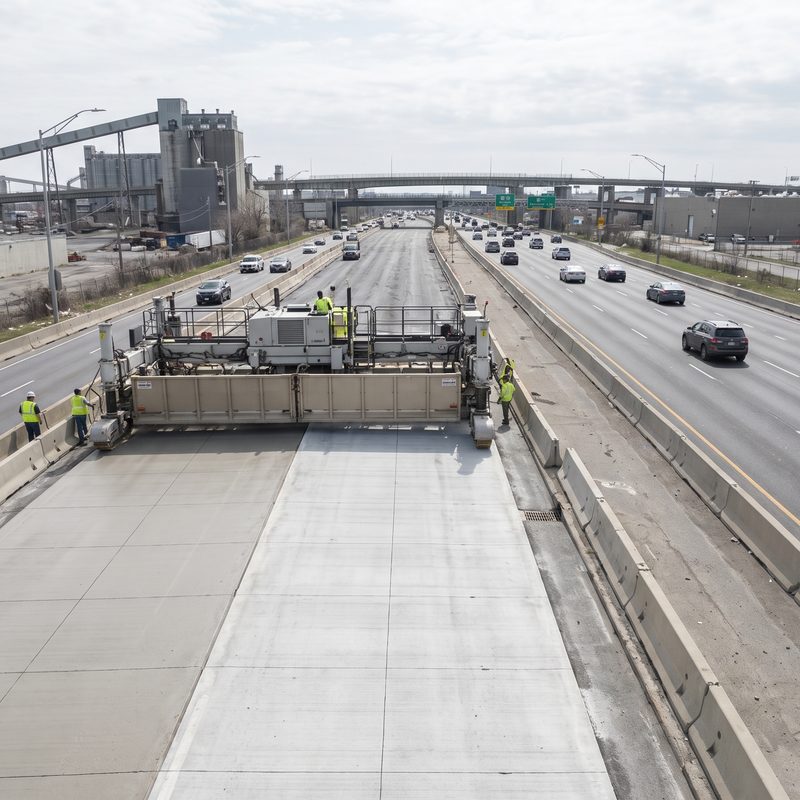
Concrete paving machine placing a new highway slab beside live traffic lanes

Sector 02

Bridges & ports

Marine and structural assets fail at the durability boundary: chloride ingress, sulfate attack and freeze-thaw cycling shorten service life, while every rehabilitation closes a berth or a span.

Why NuGreen may matter

  • Reported chloride-ion penetration below 1,000 coulombs (ASTM C1202; historical result, not the principal chloride qualification) Technical performance
  • Reported excellent sulfate resistance (ASTM C1012) and 300+ freeze-thaw cycles (ASTM C666); primary reports being consolidated Technical performance
  • Rapid early strength can shorten the closure required for rehabilitation work

Typical project types

Bridge deck and substructure rehabilitation · quay and berth repair · splash-zone elements · wastewater and other aggressive-exposure structures

Discuss durability requirements

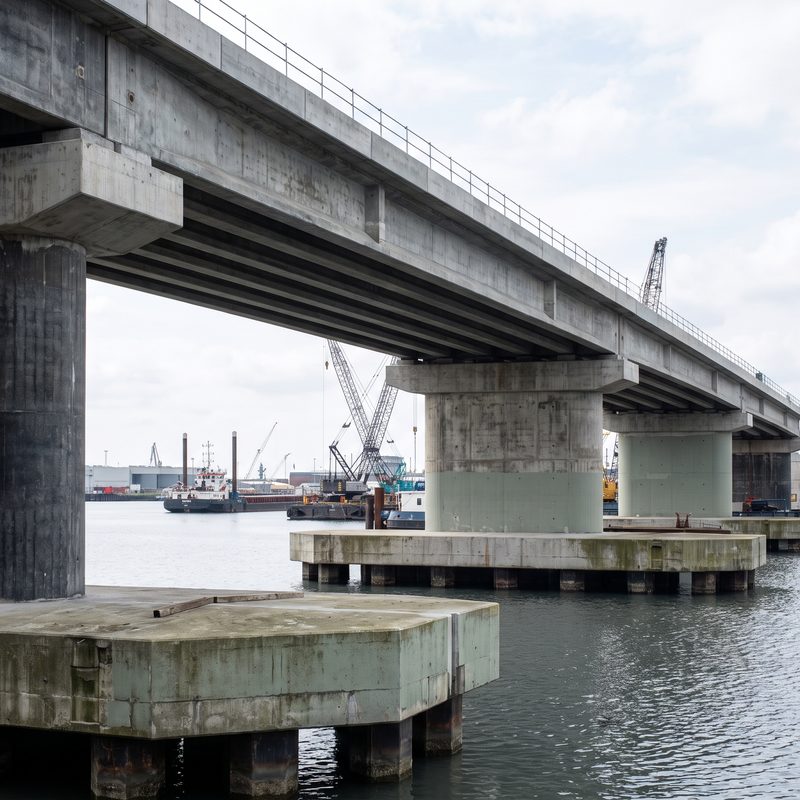
Concrete bridge piers and deck spanning water at a working port

Sector 03

Urban & institutional

Commercial and institutional projects increasingly carry embodied-carbon targets written into the specification — without any corresponding relaxation of programme, budget or buildability.

Why NuGreen may matter

  • 82.6 kg CO₂e/m³ cradle-to-gate global warming potential Independent LCA data
  • ~81% lower than published industry reference concrete at the 6,000 psi strength class* Benchmark comparison
  • Supports LEED objectives and embodied-carbon reporting, using existing supply and placement workflows

Typical project types

Commercial and institutional frames · slabs and podiums · mass concrete elements · public and civic buildings

Request environmental documentation

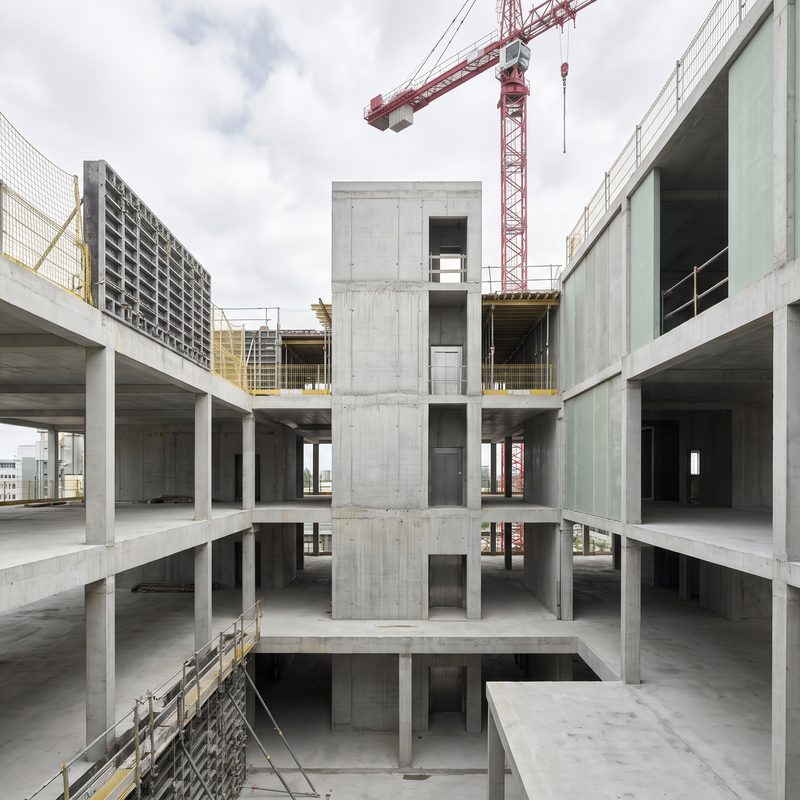
Exposed cast-concrete structural frame of a building under construction beneath a tower crane

Sector 04

Precast & industrial

In plant production the constraint is cycle time: how soon an element can be stripped, moved and the bed reused. On industrial floors the equivalent constraint is how soon the facility can operate again.

Why NuGreen may matter

  • ~5,000 PSI in approximately 90 minutes supports early strip and handling Technical performance
  • ~9,000 PSI at 24 hours, reaching 13,000+ PSI at 28 days in reported high-performance results Technical performance
  • Runs through existing plant batching and handling equipment

Typical project types

Precast structural and architectural elements · pipe and box culvert · industrial and warehouse floors · plant repair with short shutdown windows

Discuss a pilot pour

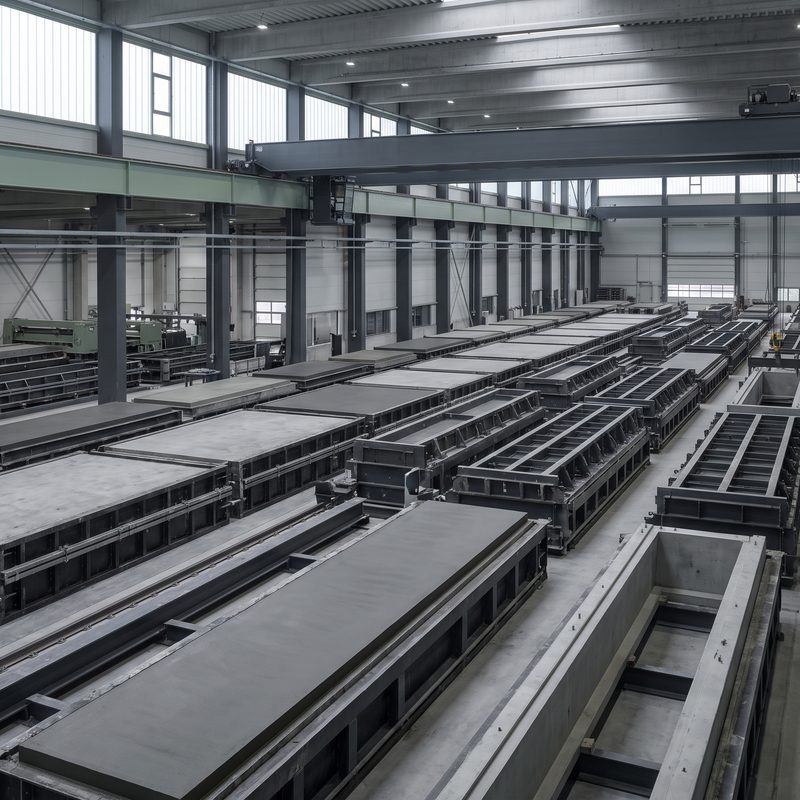
Precast concrete plant with rows of casting beds and an overhead gantry crane

Sector 05

Rapid reconstruction

Restoring damaged civil infrastructure is a logistics problem as much as a materials one: access is constrained, supply is disrupted, and every day a route or facility stays closed carries a cost.

Why NuGreen may matter

  • ~5,000 PSI in approximately 90 minutes, and ~9,000 PSI at 24 hours, supporting compressed reinstatement sequences Technical performance
  • Built on industrial mineral resources rather than Portland clinker, changing which inputs the supply chain depends on
  • Production logistics, including any near-site or decentralised production, are assessed per project

Typical project types

Emergency route reinstatement · structural repair · temporary and permanent civil works · critical-facility restoration

Discuss project logistics

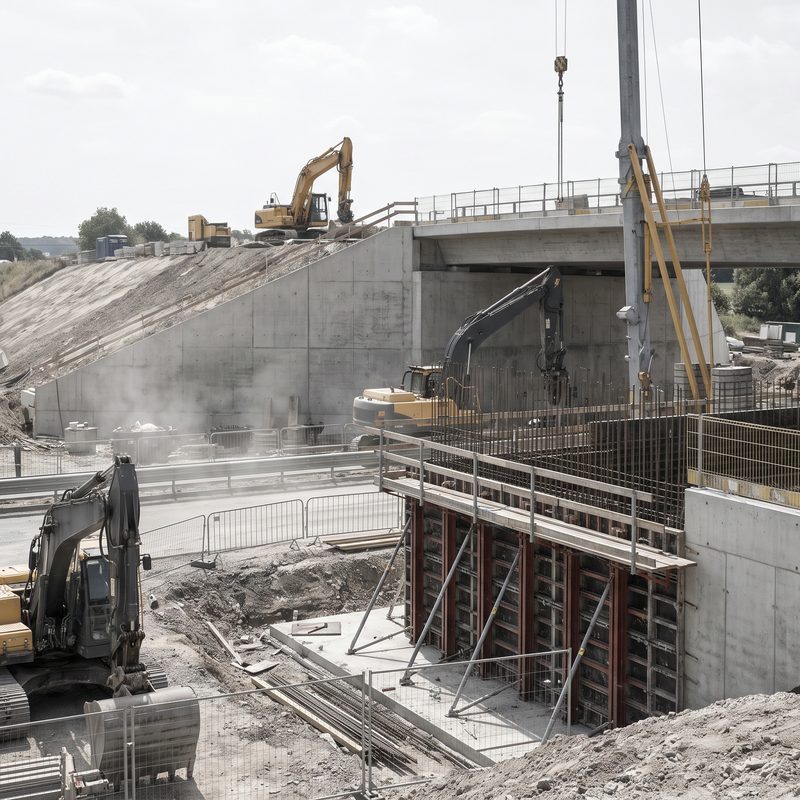
Bridge approach under reconstruction with excavators, formwork and reinforcement in place

* Benchmark comparison — NuGreen calculation using documented reference values against published NRMCA/PCA industry datasets — methodology. Application relevance is project-dependent; performance under your materials, mix design and acceptance criteria is confirmed through project-specific evaluation. Strength and durability figures are reported results; primary laboratory reports are being consolidated into the substantiation file. Hot-weather performance is under validation with a UAE ready-mix partner; no temperature limits are stated until that programme reports.

Next step

Have a project that doesn't
fit a category?

Concrete requirements are project-specific. Share your performance, schedule and environmental targets with the NuGreen technical team.